Easter Traditions in Romania

For Christians, Easter is a deeply religious holiday, celebrating the day Jesus arose from the dead after the Crucifixion.

Romanians start preparing for this special day long before The Easter. Firstly they start purifying their body and thoughts during the 48 days period before the Easter by restraining from meat, eggs or dairy (animal products) and by praying and going to Church more often.  This Lent period is called Postul Pastelui and is the longest lent period of the year. During this period, no weddings are being served by priests and partying is not allowed.

Free Romanian Language and Culture Class

Christian or Pagan Celebration?

Nonetheless, as in almost all countries, this Celebration is an extraordinary mixture between paganism and religious
symbols.

The Christian tradition says that when the Virgin Mary came to cry for her crucified son, she placed a basket of eggs under the Cross. The eggs turned red as a symbol of the blood that flowed from the wounds of Jesus, and since then we paint Easter eggs. So in the Orthodox Church, the priest gives only red eggs to the faithful.

But we also see the Easter Bunny delivering these eggs and we cannot stop from asking ourselves why would a Bunny deliver eggs?

Well, this tradition was taken from the Anglo-Saxon pagan tradition. There is a legend that the Goddess of spring, Eostre (Easter) found a wounded bird in winter, and the only way to save it was to turn it into a rabbit. Although it wasn’t a bird any more, the rabbit could still lay eggs, and to thank the Goddess for saving her life, the rabbit was decorating her eggs and was giving them to her savior.


The Easter Nightinviere-465x390
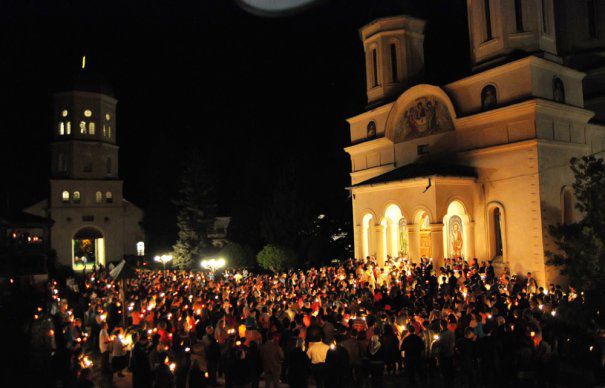
On the night before Easter, Romanians go to church dressed in new clothes as to celebrate Christ resurrection in His new body of light. At midnight, everyone lights a candle from the priest’s candle, which symbolizes both the return of Jesus from the dead and also the power of one powerful soul to light hundreds of other souls.

After attending the religious service which ends at about 4 o’clock in the morning, everyone goes home, carefully holding their candle and extinguishes it on the door frame.

The best place to feel the Celebation and witness it, is the Easter service in one of the churches and Monasteries you can find anywhere. Even Romanians who consider themselves quite cynical about the church, usually make the effort to go to Easter mass. While services nominally get underway shortly before midnight, if you want a decent view, or even to get inside, you will need to be at the church by around 23:00.  Otherwise you would be only able to admire a big crowd surrounding the church.

Free Romanian Language and Culture Class


The Easter Morning

On Easter morning the faithful wash their faces with water from a bowl , into which mothers put a red egg and a coin. It is said that if you wash your face with this water, you will be healthy and beautiful.

The first thing everybody eats is a red egg and this is done only after following a small ritual of breaking eggs. Two people hold two eggs, one of them saying “Hristos a Înviat” (Christ has risen), the other saying “Adevărat a Înviat” (He has Risen indeed)


easter eggs

The Painted Eggs

Bucovina is renowned for having the most beautiful Easter eggs “oua incondeiate” (painted eggs) which are made using a complicated procedure that requires much patience and skill. On the background color of the egg, women draw beautiful patterns with melted beeswax, turning a simple egg into an amazing piece of art.


The food

If you spend Easter in a traditional Romanian family (or at a guest house that respects the holiday tradition), you will see several specific dishes on the table for the occasion. Besides the Easter eggs Romanians eat ‘Pasca‘, the traditional Romanian Easter cake, which is a type of sponge cake filled with cheese, eggs and raisins. Sweet bread (cozonac), which is a slightly sweet yeast-raised egg bread, the lamb soup, lamb steak, haggis (drob) – which is a traditional national Easter dish that uses the organs of the lamb.

Drop us a line or comment to tell us how you spent this holiday in Romania and what impressed you most.


Romanian Language Essentials 


Present Perfect și Past Simple – test

present perfect engleza

Acest test conține 13 întrebări. Timp mediu de rezolvare 4 minute.

Curs online: English Mastery: sute de resurse pentru fluenta in timp record

Present Perfect vs. Past Simple

Present Perfect – 10 Questions test

present perfet engleza


Present Perfect Tense și alte timpuri – 10 întrebări

www.accesis.ro

Timpurile in engleză – Traduceri

Translate  the following sentences using the  Present Simple/Continuous ,  the Past Simple/Continuous and  the Present Perfect:

  1. Alina lucrează la acest proiect de lunea trecută.
  2. De zece ani călătoresc numai cu autobuzul.
  3. Acum zece minute am întrebat ceva , dar nimeni nu mi-a răspuns încă.
  4. Mă doare capul. Am venit acasă, am început să scriu tema la engleză şi n-am terminat-o  încă.
  5. Prietena mea merge la cumpărături în fiecare dimineaţă.
  6. Cum te mai simţi?
  7. Colegii mei învaţă foarte bine.
  8. Plouă des în Franţa?
  9. Tocmai am terminat de scris raportul.
  10. Nu l-am văzut de când s-a întors din călătoria de afaceri.
  11. Am verificat-o deja şi nu am găsit nici o greşeală.
  12. Verişoara mea face nişte prăjituri excelente.
  13. De câte ori pe an te duci la teatru?
  14. Tocmai am vorbit cu el şi mi-a spus că totul e în regulă.
  15. De cât timp învăţaţi limba engleză?
  16. De cât timp mă aşteptaţi?
  17. Am vorbit deja cu ei şi m-au asigurat că livrarea se va face la timp.
  18. De când tot cauţi dosarul acela?
  19. Ieri am încercat toată ziua să vorbesc cu şeful meu. Azi încerc să îl întâlnesc de azi dimineaţă şi tot nu reuşesc.
  20. Săptămâna trecută ne-am chinuit 3 zile să reparăm o mare greseala si în final am reuşit. Săptămâna aceasta ne străduim de 2 zile să reparăm o alta  şi încă nu am reuşit.
  21. Tocmai am vorbit cu el şi mi-a spus că totul e în regulă.
  22. Am verificat-o deja şi nu am găsit nici o greşeală.

The Present Perfect Tense

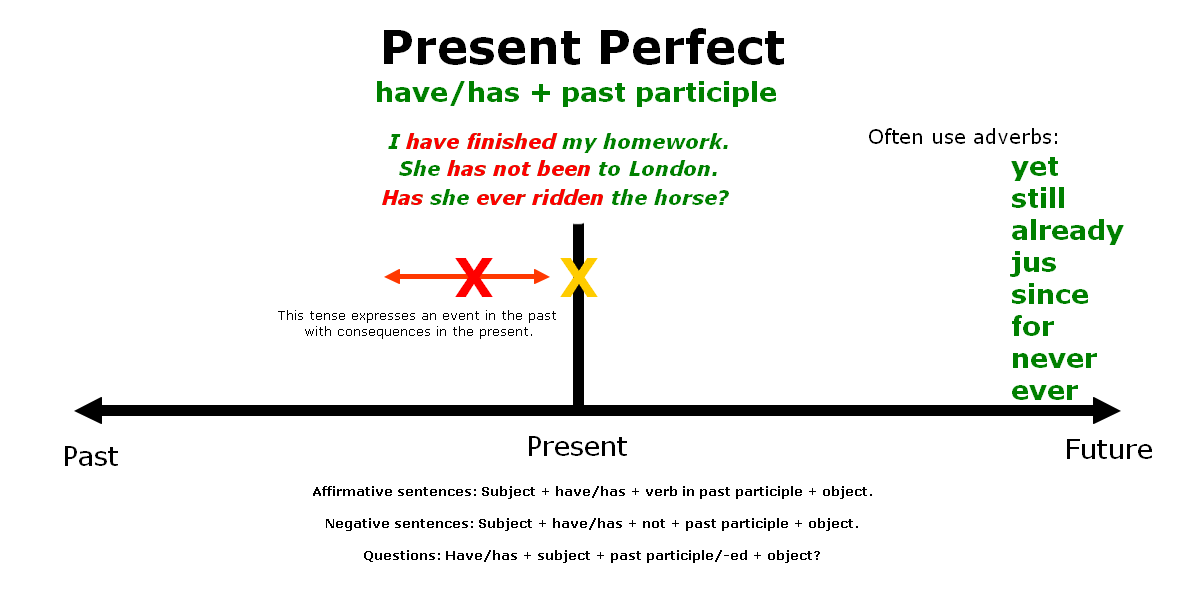
Present Perfect (HAVE/HAS + V3) este utilizat în special pentru actiunile pentru care nu ne intereseaza neaparat momentul in care s-a realizat o actiune ci actiunea in sine.  Acesta poate fi un concept greu de procesat pentru un vorbitor nenativ, insa marcatorii de timp specifici, ne pot ajuta sa intelegem mai bine la ce ne referim

Time Markers: ever, never, always, once, many times, several times, before, so far, already, yet, etc. (expresii de timp nespecifice)

Exemple:

  • I have seen that movie twenty times.
  • I think I have met him once before.
  • Nobody has ever climbed that mountain.

Cum poți utiliza Present Perfect?

Poți utiliza acest timp ca să-ți descrii experiența și realizările, schimbările și acțiunile neterminate sau recente.

  • I’ve just closed a good deal. (actiune recenta)
  • Doctors have cured many deadly diseases. (realizare)
  • My niece has learned how to read. (realizare)
  • He has never traveled by train. (experiență)
  • I have been to France three times. (experiență)
  • You have grown since the last time I saw you. (schimbare in timp)
  • My English has really improved since I moved to Australia.  (schimbare in timp)
  • Marie has not finished her homework yet. (actiune neincheiata)
  • The rain hasn’t stopped.  (actiune neincheiata)


Cum se formează?

Afirmativ
Subiect to have past participle
She has bought.
Negativ
Subiect to have + not past participle
She has not (hasn’t) bought.
Interogativ
to have subiect past participle
Has she bought?
Negativ interogativ
to have + not subiect past participle
Hasn’t she bought?


Present Simple, Present Continuous & Present Perfect

Ask your language trainer to give you further expalnation.

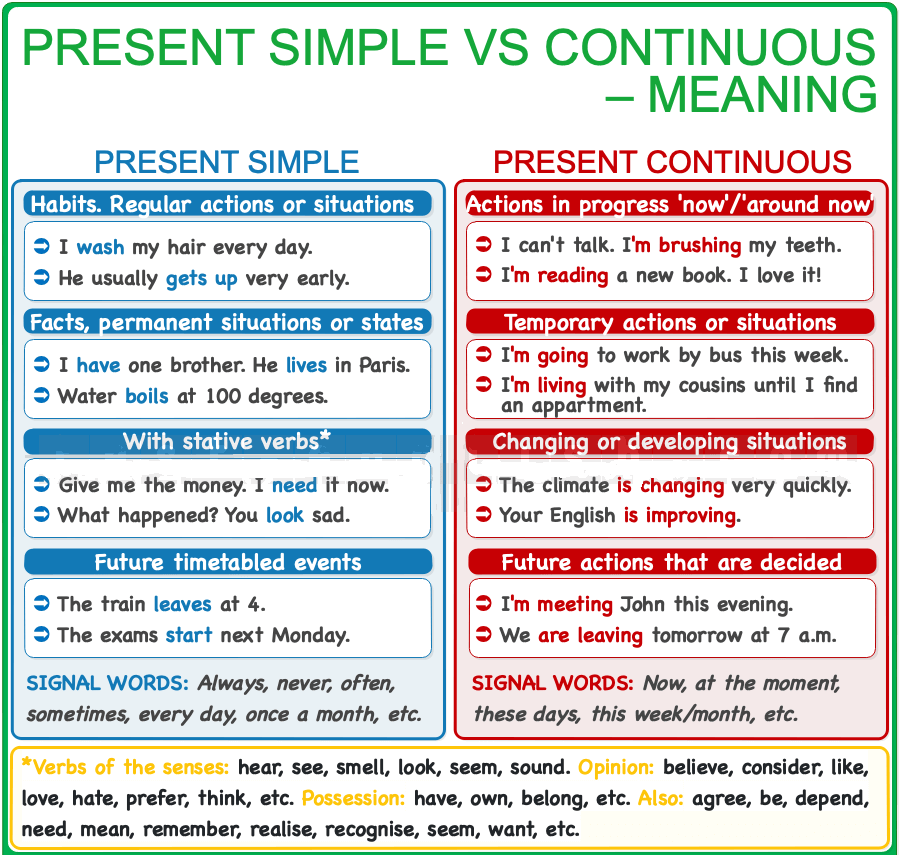
THE PRESENT SIMPLE TENSE (1ST FORM OF THE VERB) Is used to express:

  1. Habitual actions (+often, usually, never, every day, in the morning, on Sundays) ex: My mother usually goes to the market place on Sunday mornings.
  2. General truths or characteristics.  ex: The Earth moves round the Sun.
  3. Momentary actions, completed almost at the same time they are performed (demonstrations, ceremonies, TV commentaries, announcements, headlines) ex: Bill gets out of bed,comes downstage a bit, and stands attentively.
Present Simple –Affirmative Present Simple – Interrogative Present Simple – Negative
  • I work.
  • You work.
  • He works.
  • She works.
  • It works.
  • We work.
  • You work.
  • They work.
  • Do I work?
  • Do you work?
  • Does he work?
  • Does she work?
  • Does it work?
  • Do we work?
  • Do you work?
  • Do they work?
  • I don’t work.
  • You don’t work
  • He doesn’t work
  • She doesn’t work
  • It doesn’t work
  • We don’t work
  • You don’t work
  • They don’t work


PRESENT CONTINUOUS TENSE (TO BE + VB + ING) Is used to express:

  1. An action happening at the moment of speaking (the action has duration and it is not completed) ex: I am not wearing a coat as it isn’t cold.
  2. An action that extends over a (slightly) longer period of time, including the time of speaking. ex: I am reading a novel by John Fowels.
  3. A temporary limited action (+an adverbial indicating present time). ex: I live in Brașov but I’m living in Bucharest this year.// Why are you being rude?


Present Continuous –Aff. Present Continuous – Interrog. Present Continuous – Negative
  • I am working.
  • You are working.
  • He is working. She is working. It is working.
  • We are working.
  • You are working.
  • They are working.
  • Am I working?
  • Are you working?
  • Is he working? Is she working Is it working?
  • Are we working?
  • Are you working?
  • Are they working?
  • I’m not working.
  • You’re not working.
  • He’s not working. She’s not working. It’s not working.
  • We’re not working.
  • You’re not working.
  • They’re not working.


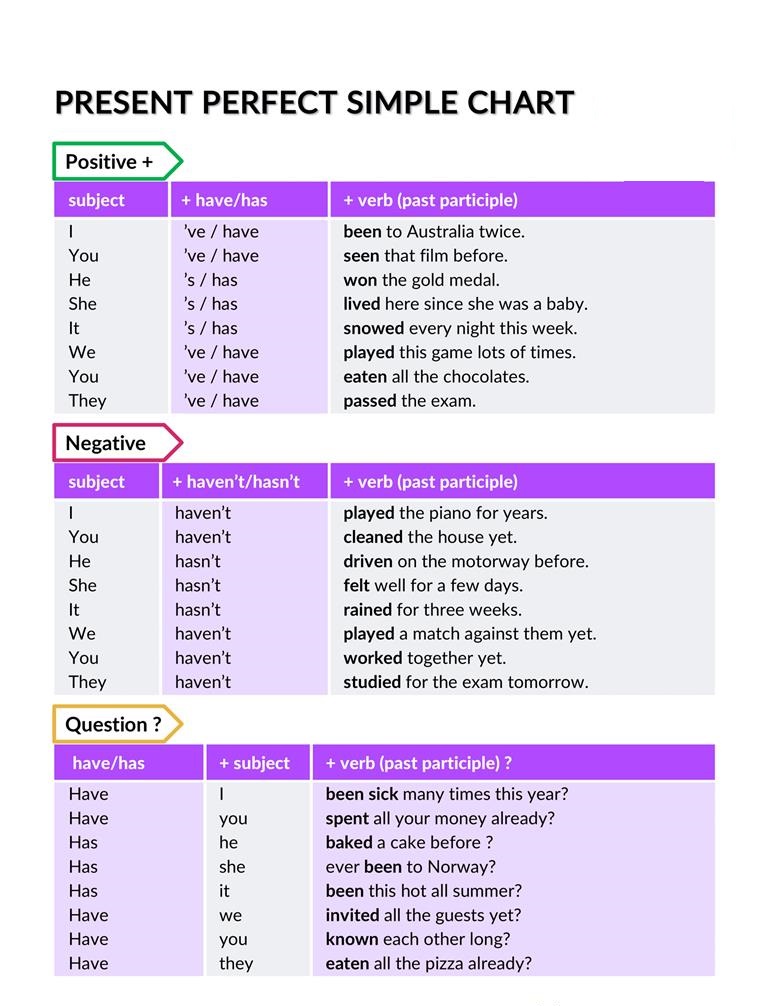
THE PRESENT PERFECT (HAVE/HAS + V3-past participle) IS USED TO DESCRIBE

  • An action or situation that started in the past and continues in the present. I have lived in Bucharest since 1992 (= and I still do.)
  • An action performed during a period that has not yet finished. She has been to the cinema twice this week (= and the week isn’t over yet.)
  • A repeated action in an unspecified period between the past and now. We have visited Portugal several times.
  • An action that was completed in the very recent past, expressed by ‘just’. I have just finished my work.
  • An action when the time is not important. He has read ‘War and Peace’. (= the result of his reading is important)

Important note: When we want to give or ask details about when, where, who, we use the simple past.


Present Perfect – Affirmative Present Perfect- Interrogative Present Perfect- Negative
  • I have worked.
  • You have worked.
  • He has worked.
  • She has worked.
  • It has worked.
  • We have worked.
  • You have worked.
  • They have worked.
  • Have I worked?
  • Have you worked?
  • Has he worked?
  • Has she worked?
  • Has it worked?
  • Have we worked?
  • Have you worked?
  • Have they worked?
  • I haven’t worked.
  • You haven’t worked.
  • He hasn’t worked.
  • She hasn’t worked.
  • It hasn’t worked.
  • We haven’t worked..
  • You haven’t worked.
  • They haven’t worked.


Present Simple & Present Continuous – Short Test

Invata gramatica rapid si organizat. Exploreaza cursuri.

Present Simple & Continuous – 10 questions test

Tradiții de Paște în Anglia

Invata Engleza accelerat – noile programe Accesis

Marea Britanie este o insulă străveche, plină de superstiții și tradiții. Când vine Paștele, vizitatorii care ajung în Marea Britanie sunt adesea surprinși de unele dintre evenimentele, paradele și practicile străvechi pe care le pot vedea in unele parti ale țării.

Pe lângă pictura pe ouă și vânătoarea ouălor, întâlnim o tradiție care provine din moștenirea pre-creștină și care a fost o parte importantă a sărbătorilor de Paște timp de secole: Maypole Dancing (dansul in jurul catargului)

Dansatorii se țin de panglici colorate care sunt atașate în vârful unui stâlp înalt și dansează într-un anumit ritm îndelung exersat, adesea pe muzica live cântată de fanfara din sat sau acompaniati de aplauzele în cadență ale spectatorilor. 

În urma acestui dans rezulta modele de impletitură, uneori ordonate alteori asemănătoare unei pânze de paianjen.  În mod ideal, fetele trebuie să se împletească acest model în același timp, ăn mod uniform. Băieții stau la o oarecare distanță de stâlp, cu panglica strânsă pe umărul drept. Acest tip de dans este unul dintre preferatele fetelor, deoarece este o adevărată provocare.


In limba engleză, cuvântul ”Easter” (Paștele), a apărut apărut înainte de anul 899 d.Chr. fiind derivat din numele zeitei Eostre (păgânismul anglo-saxon) care era sarbatorită cu prilejul echinocțiului de primăvară, în jurul datei de 21 martie,  Eostre avand drept animal favorit iepurele.

Pastele este celebrat in Marea Britanie intr-o maniera caldă, de obicei in mijlocul familiei, insa in mod mai putin exuberant decat Carciunul.

”Duminica frunzelor de palmier”

Cu o saptamana inainte de Pasti, se celebreaza ”Duminica frunzelor de palmier” (Palm Sunday), o zi echivalenta Floriilor de la romani, zi in care englezii participa la parade purtand in maini frunze de palmier.

Numele acestei sarbatori isi are originea in vremurile imperiului roman, cand orice personaj regal era intampinat de multime prin fluturarea unor frunze de palmier. Iisus a intrat in Ierusalim in Duminica palmierilor , iar oamenii l-au onorat asternandu-i un covor de frunze de palmier in drumul sau.

Bisericile
decoratiune paste biserica
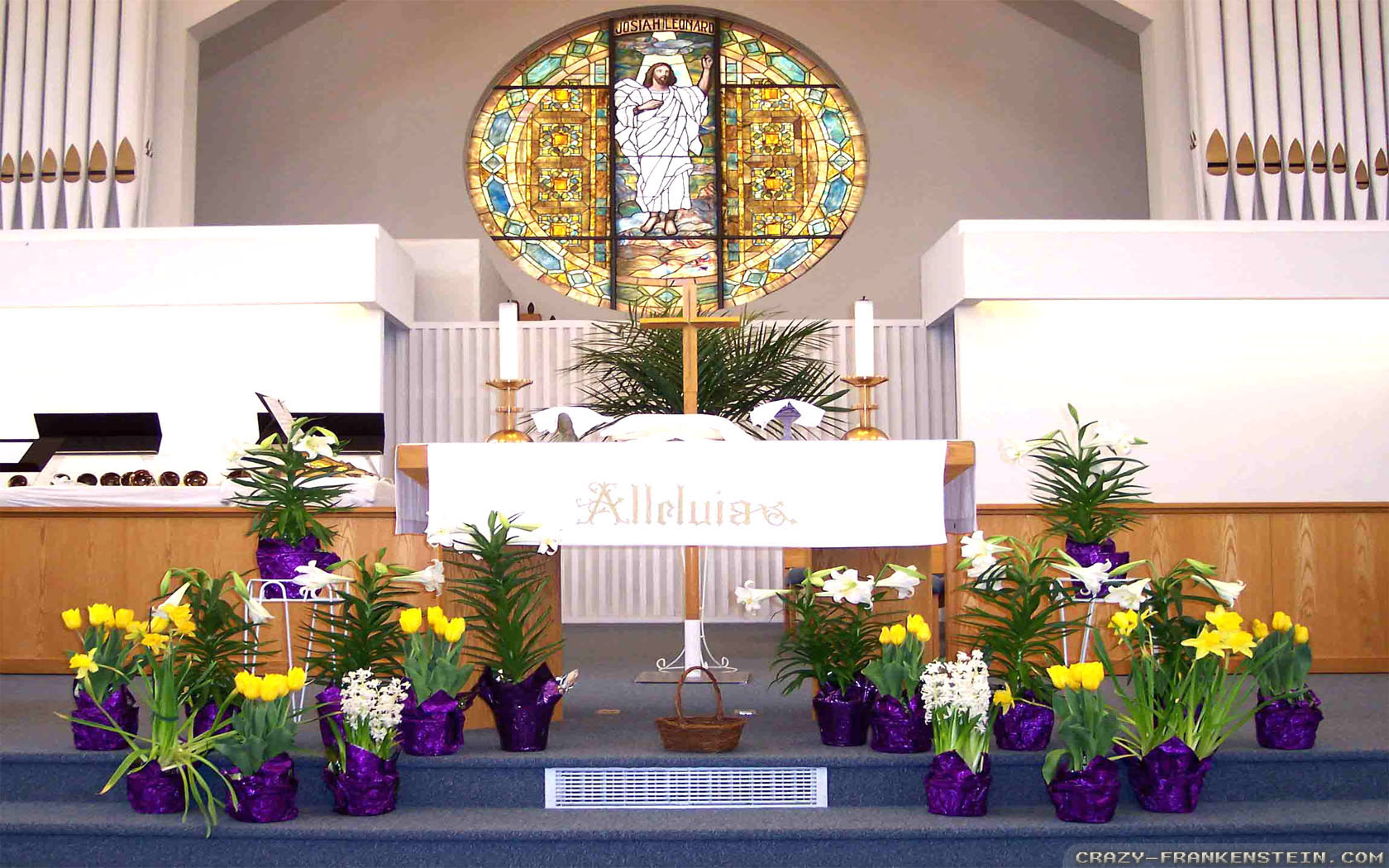
Locasurile de cult (dominate de bisericile anglicane si bisericile romano-catolice)  celebrează Invierea lui Christos prin slujbe traditionale iar spatiul altarului este impodobit cu ghirlande de crini albi sau ”Crinii Fecioarei” (Madonna Lily,  Easter Lily), simbol consacrat puritatii si frunze de palmier. In unele biserici frunzele de palmier sunt folosite pentru impletirea unor ghirlande si a unor aranjamente in forma de cruce.

In zonele rurale, femeile care merg la slujba Pastelui poarta traditionalele ”Easter Bonnets”, palarii de Pasti impodobite cu flori.

The Easter Bunny

Potrivit unui ritual stravechi, iepurasul de pasti (Easter Bunny) ascunde oua prin gradini, pe care copiii trebuie sa le gaseasca. In unele localitati, in ziua de ”martea iertarii” (Shrove Tuesday), ultima zi inaintea postului de Paste, se organizeaza intreceri de alergare cu cratite pline cu clatite. Olney este un mic oras renumit pentru pastrarea acestei traditii de mai bine de 500 de ani.

Ouale de Pasti

easter eggs

Ca si in Romania, schimbul de ouă si consumarea lor de Paști este un obicei popular in UK ca si în multe țări. Acestea sunt colorate viu si sunt centrul unor jocuri traditionale gen pravalirea de pe deal.

In Preston, Lancashire se pastreaza acest obicei, in care participantii dau drumul pe versantul unui deal la oua pentru a vedea care dintre acestea ajunge cat mai departe nevatamat. Proprietarii ale caror oua raman intregi sunt castigatorii competitiei.

Invata Engleza accelerat – noile programe Accesis

Bucataria de Paste: simnel, miel si chifle

Simnel-Cake

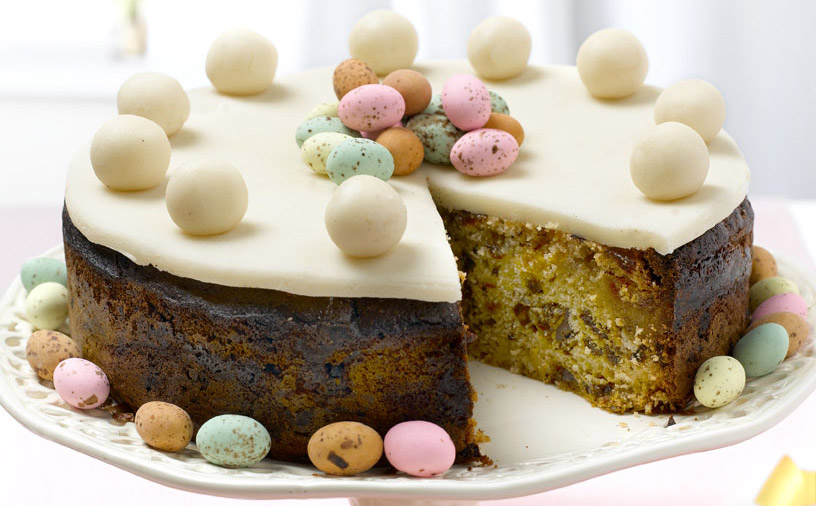
Prajitura Simnel (Simnel cake) esta un fel de prajitura care are o crusta din făină șofranși apă și umpluta cu prune și fructe confiate și aromată cu multa coaja de lamaie. Prajitura este decorata cu 11 bomboane sferice de martipan , reprezentand cei 11 discipoli credinciosi ai lui Iisus. Denumirea prajiturii vine de la un cuplu tradițional, Simon și Nelly care este prezentat in mod amuzant ca facand aceasta prajitura din oua vechi si ramasitele altor prajituri din anii precedenti.

Friptura de miel este felul favorit pentru duminica de Pasti si este gatita cu condimente traditionale si vin.

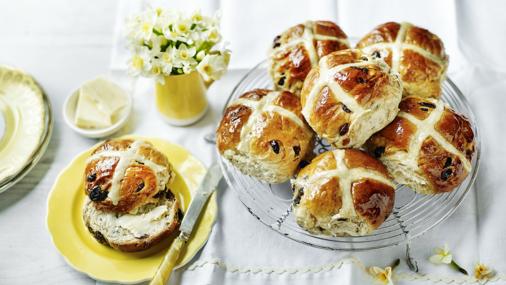
Chiflele (Hot cross Buns)  sunt niste preparate foarte consistente cu o aroma delicata si care conțin stafide sau coacaze si fructe confiate. Înainte de coacere chiflele se ornamenteaza o cruce din zahar care simbolizeaza crucea pe care a fost rastignit Iisus.

Sunt consumate calde, in Vinerea Mare, cu bucati de unt.

chifle de paste uk

In asteptarea chifelor, parintii indeamna copiii sa cante o veche rima:

“Hot cross buns, hot cross buns,
one a penny, two a penny,
hot cross buns.

If you do not like them,
give them to your sons,
one a penny, two a penny,
hot cross buns.”

Dansul lui Morris 

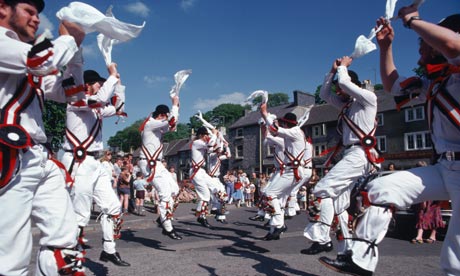
Este un ritual traditional care are scopul de a alunga spiritele iernii. Dansul are figuri coregrafice specifice iar trupele de dansatori poarta accesorii precum bete, sabii, batiste si clopotei, poarta pantaloni scurti albi sau negri, esarfe rosii, panglici verzi si rosii ,  aseamanandu-se izbitor cu calusarii romanesti.

morris dance

Urmărește aici un scurt video History despre Paște.

Click pe imagine

history

Pregateste-ti copilul pentru examenele Cambridge si IELTS

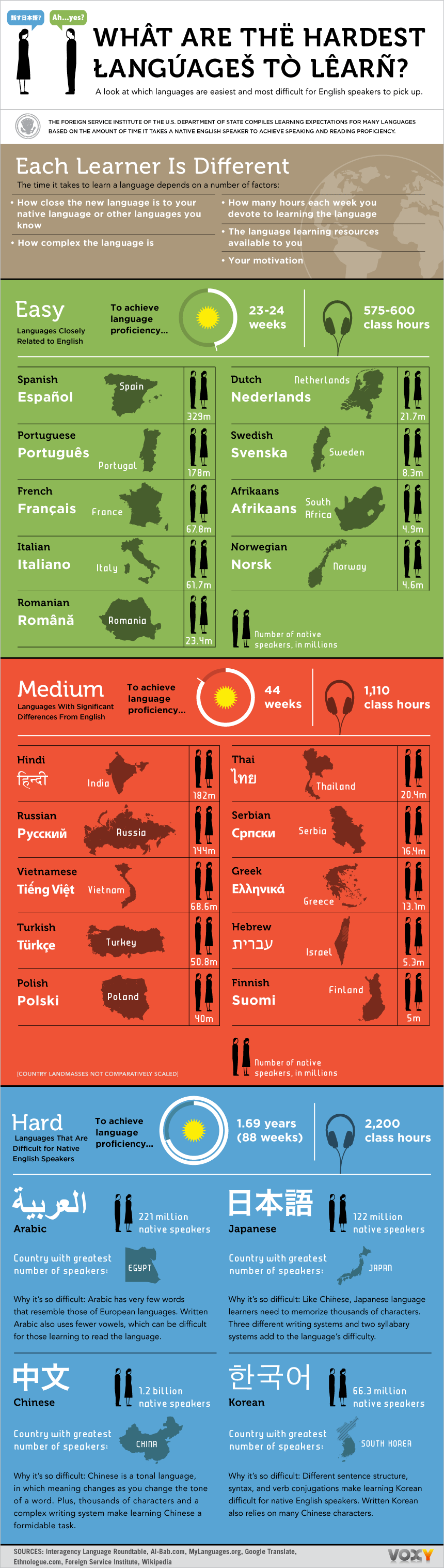
INFOGRAFIC: Top cele mai cele mai dificile limbi străine.

Învățarea unei limbi noi poate ridica dificultăți specifice limbii, dar pentru un vorbitor român, unele limbi pot fi mai complicate decât altele. Pentru vorbitori nativi de limba română, nivelul de dificultate al unei limbi noi depinde de o varietate de factori și în special de clasa de care aparține limba studiată.

Pentru țara noastră, cele mai ușor de învățat limbi sunt, bineînțeles, cele romanice, iar engleza, cu toate că este o limbă germanică, se încadrează în top cele mai ușor de învățat limbi pentru un român. În același mod, limba română va fi relativ ușor de învățat pentru un vorbitor nativ de limbă engleză.

Mai jos puteți vedea un infografic care ilustrează cel mai ușor de învățat limbi pentru un nativ englez, inforgrafic care este valabil și pentru un vorbitor român.

Top cele mai dificile limbi

Test de limba germană pentru începători

Test de limba germana pentru incepatori

Dacă ai început să studiezi limba germană sau ai asta în plan, acest test simplu îți evaluează cunoștințele de bază îți oferă o idee despre lacunele pe care le ai și bineînțeles, ce ar trebui să aprofundezi. Vei primi rezultatul imediat. Notează acest punctaj și reia testul la un anumit interval de timp pentru a observa îmbunătățirile. Mult Succes!

Detalii despre cursurile de limba germană “Deutsch Lernen” pe site-ul : www.accesis.ro